The Enamel Review · Artificial Intelligence
The Future of Dentistry Isn't More Tech — It's Humanity
Faster scanners and smarter algorithms are reshaping the operatory, but the variable patients remember most is still the quality of attention they received.
In a natural, human-quality voice · about 4 min · free when you register
Read aloud · 0:00 / 4:00 · the text follows along
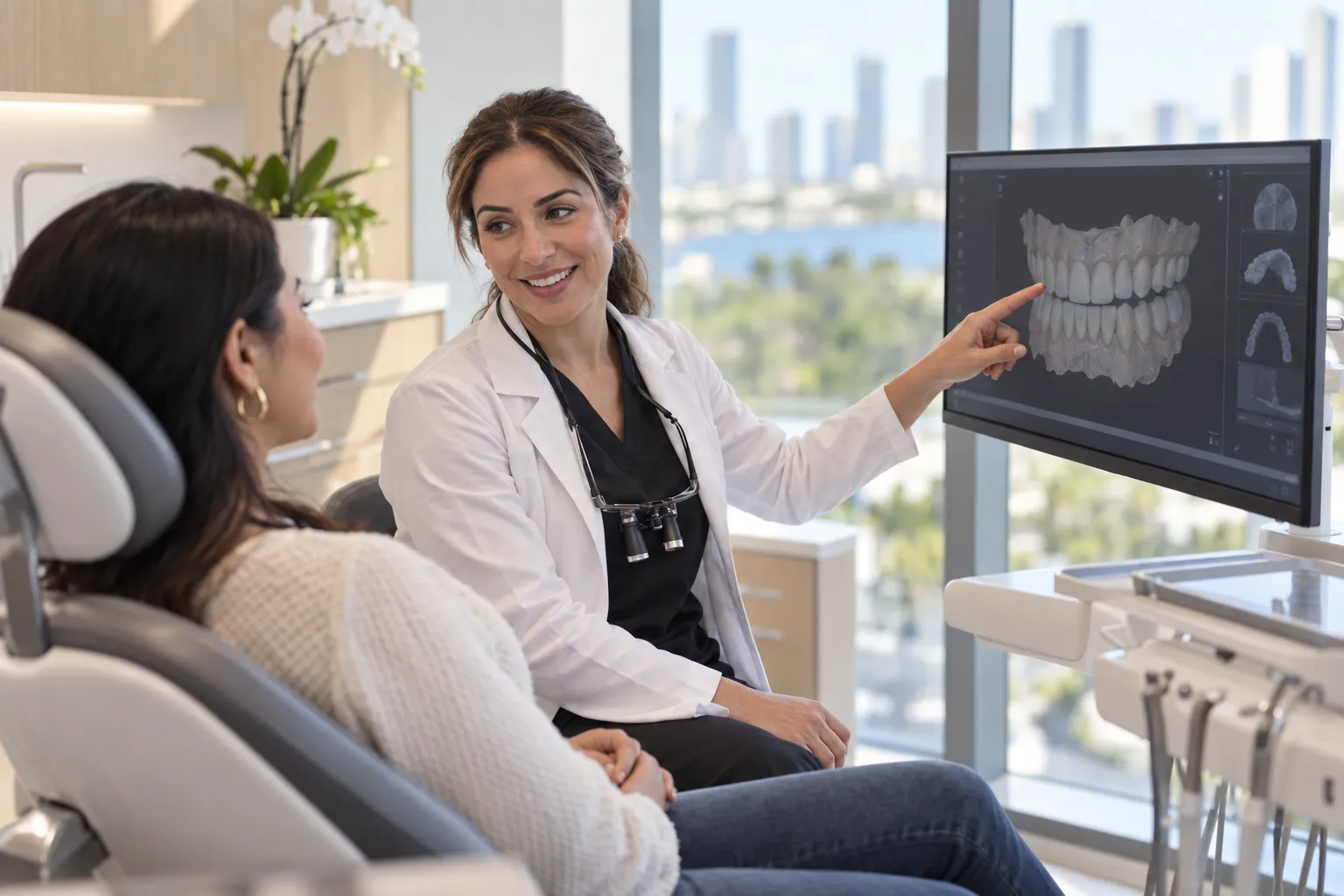
A commentary published in ADA News this fall makes an argument that sounds almost countercultural in a profession currently enamored of intraoral scanners, chairside milling and machine learning: the defining advance of the next decade may not be technological at all. It may be the deliberate restoration of human attention to a clinical encounter that technology has, in many practices, quietly compressed. The claim is worth taking seriously — not as a rejection of innovation, but as a question about what all that innovation is actually for.
The honest answer is that dentistry’s tools have improved faster than its relationships. A patient today can receive a digitally designed restoration with tolerances measured in microns and still leave the office unable to explain, in their own words, what was done to their tooth or why. Those two facts are not in tension by accident. They are in tension because precision and understanding are produced by different processes, and only one of them can be purchased.
What technology actually delivers — and what it doesn’t
The gains are real and should not be minimized. Digital workflows have shortened the distance between diagnosis and delivery. Comparative work on 3D-printed versus conventionally fabricated complete dentures has examined time-efficiency and cost questions that matter enormously to edentulous patients on fixed incomes. Retrospective series on robot-assisted implant surgery have begun to characterize placement accuracy in ways that were not measurable a generation ago. Artificial intelligence applied to radiographic interpretation is being evaluated as an adjunct for caries and periapical lesion detection, and the U.S. Food and Drug Administration has cleared a growing number of software tools intended to assist — not replace — clinician judgment.
What none of these systems deliver is meaning. An algorithm can flag a radiolucency. It cannot determine whether a particular patient, with a particular history of dental anxiety and a particular set of financial constraints, should proceed with treatment this month or next year. It cannot notice that someone flinched at the word “extraction” because of a memory from childhood. Those judgments live in the space between two people, and they remain stubbornly analog.
Efficiency has a hidden cost
There is a structural reason humanity erodes in modern practice, and it is not indifference. It is throughput. Every minute saved by a faster workflow becomes, in most business models, a minute reallocated to another procedure rather than returned to the conversation. Over time the schedule tightens around the technology’s capabilities rather than the patient’s comprehension.
The consequences show up in places we do not always connect to chairside time. Research published in the peer-reviewed dental literature has examined patient, tooth and dentist characteristics associated with multi-visit nonsurgical root canal treatment — a reminder that treatment pathways are shaped by human and systemic variables, not solely by pulpal anatomy. These are associations, not causal chains, and they should be read that way. But they point toward something clinicians already sense: the decisions patients make about completing care are entangled with trust, logistics and understanding.
Access policy operates on the same logic at a population scale. The ADA’s advocacy urging CMS to recognize adult dental coverage as an essential health benefit is, at bottom, an argument that the most sophisticated technology is irrelevant to a person who cannot get through the door.
A more useful framing than “human versus machine”
The false choice is technology or humanity. The more accurate framing is that automation should be pointed at the tasks that consume clinician attention without requiring clinician judgment — charting, documentation, insurance narratives, preliminary image triage, appointment logistics. Each of those, handled well by software, returns cognitive bandwidth to the operatory.
That is the test worth applying to any new system a practice considers adopting. Does this tool give the clinician more attention to spend on the person in the chair, or does it simply allow the practice to see more people in the same number of hours? Both are legitimate business decisions. Only one of them is a clinical improvement.
Professional bodies have gestured at this distinction. The ADA maintains policy guidance on the use of artificial intelligence in dentistry, and its standards work through the ADA Standards Committee on Dental Informatics addresses interoperability and data questions that underpin responsible deployment. The consistent through-line in credible guidance is that these systems are adjunctive — decision support, not decision-making.
What this means for your next appointment
If you are a patient, the practical takeaway is simple: judge a practice less by the equipment in the operatory and more by whether you leave able to explain your own treatment plan to someone else. Ask what the alternatives were. Ask what happens if you wait. A clinician experienced in complex planning should be able to answer both without reaching for a brochure. If you are a clinician, the same test applies in reverse — the scanner is working when it buys you the three minutes needed to answer those questions properly. Technology earns its place in dentistry not by impressing patients, but by making room for them.
Comments
Comments publish after a one-click email verification — every voice here is a real one. Comments are reviewed before they appear.
Loading comments…