The Enamel Review · Science
Alliance of the ADA gifts $185,000 to ADA Foundation
A small volunteer organization closed its books by sending what was left to a program that treats veterans — a quiet reminder of where dental care still falls through the cracks.
In a natural, human-quality voice · about 4 min · free when you register
Read aloud · 0:00 / 4:00 · the text follows along
Philanthropy in dentistry rarely arrives with a ribbon cutting. More often it looks like a modest line in an association newsletter: a volunteer organization, decades old, transferring the balance of its accounts to a foundation that will spend the money on chair time. That is roughly what happened when the Alliance of the American Dental Association, together with its charitable arm, the Foundation for Dental Health Education, gifted $185,000 to the ADA Foundation in support of Give Veterans A Smile. Reported by ADA News, the gift represented the organization’s remaining funds — the closing entry of a long ledger rather than an annual pledge.
Who the Alliance was, and why the gift reads the way it does
The Alliance of the ADA has existed for generations as a membership organization built largely around the families and spouses of dentists. Its work has historically been unglamorous and local: oral health education in schools, support for community clinics, fundraising for scholarships, advocacy at the state level. The Foundation for Dental Health Education served as its philanthropic vehicle.
A gift of remaining funds is a specific kind of act. It is not a campaign and not a naming opportunity. It is a decision about where accumulated, small-dollar giving should land when a chapter closes — and the choice of Give Veterans A Smile says something about which gap the donors judged widest.
Why veterans’ oral health sits in a coverage gap
Many patients assume that military service carries lifelong dental coverage. It does not, for most. Dental benefits through the U.S. Department of Veterans Affairs are tied to eligibility categories — service-connected dental conditions, certain disability ratings, former prisoner-of-war status, and similar criteria — rather than extended to every veteran as routine care. Veterans who fall outside those categories face the same marketplace everyone else does, often without employer dental insurance and sometimes with a decade or more of deferred treatment behind them.
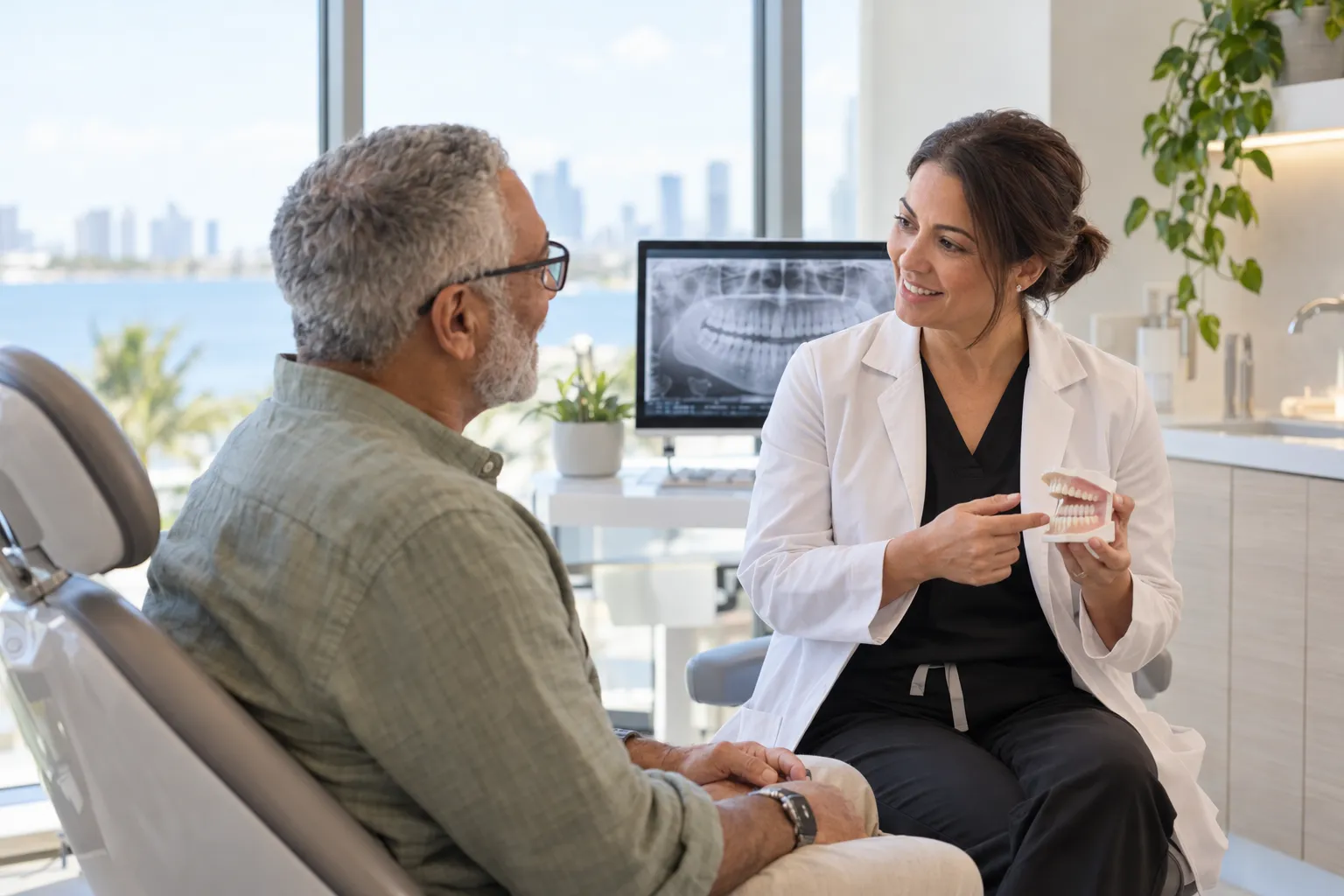
The clinical consequences are predictable. Untreated decay becomes pulpal disease; pulpal disease becomes extraction; multiple extractions become a prosthetic problem that is far more expensive than the restoration that would have prevented it. Give Veterans A Smile, run through the ADA Foundation, is a volunteer-powered response to that sequence: donated clinical days, donated materials, and local dental societies coordinating who gets seen.
It is worth being careful about the language we use for the health claims that often accompany these programs. Oral health and systemic conditions such as cardiovascular disease and diabetes are linked in the literature by association, not by demonstrated cause and effect in most cases. The honest argument for treating veterans’ teeth does not require an overstatement. Pain, infection, the ability to eat, and the ability to walk into a job interview are sufficient.
What a donation of this size can and cannot do
There is a temptation to translate a number like this into a count of patients treated. Resist it. The real multiplier in charitable dental care is donated labor and donated lab work — the clinicians who close their schedules for a day, the hygienists who come in without pay, the laboratories that waive fees on dentures. Cash grants typically cover what volunteers cannot donate: supplies, sterilization costs, imaging, anesthetic, coordination, and the unglamorous overhead that makes a volunteer day possible at all.
What a gift like this cannot do is change eligibility rules or build a standing program where none exists. Charity care is a patch, and the professionals who deliver it are usually the first to say so. The same tension runs through access-to-care research worldwide — including work on how patients describe the experience of finally receiving treatment after years of going without, which we covered in a study of Aboriginal and Torres Strait Islander peoples’ perceptions of dentures and dental care. The vocabulary patients use — relief, embarrassment, at least I can eat now — is remarkably consistent across very different health systems.
The quiet technology angle
One reason volunteer dentistry has become more productive over the last decade is that some of its most useful tools are cheap and fast. Minimally invasive approaches that arrest decay without a handpiece, for instance, have changed what a single volunteer day can accomplish in a population with heavy restorative needs; we looked at the evidence for that in our report on arresting cavities without drilling. Chairside milling and same-day full arch workflows have similarly compressed timelines where a clinic qualifies to run them — though full-mouth rehabilitation for a patient with years of neglect remains a planning problem before it is a manufacturing one, and belongs with a clinician experienced in full-arch sequencing.
For readers in South Florida, the practical takeaway is less about this particular gift than about what it signals. Charitable dental days exist in most metropolitan areas, they are usually publicized through county and state dental societies rather than through individual offices, and they fill quickly. If you are a veteran who has been deferring care, or you know one, the organization worth contacting first is your state or local dental society — and the question worth asking any clinician, charitable or not, is what the sequence of treatment will be and what it protects. Deferred dentistry rarely stays the same size.
Comments
Comments publish after a one-click email verification — every voice here is a real one. Comments are reviewed before they appear.
Loading comments…